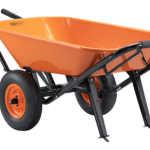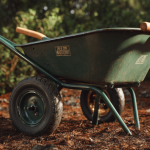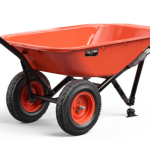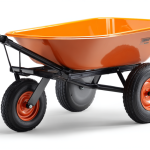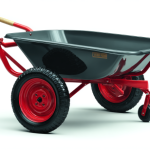
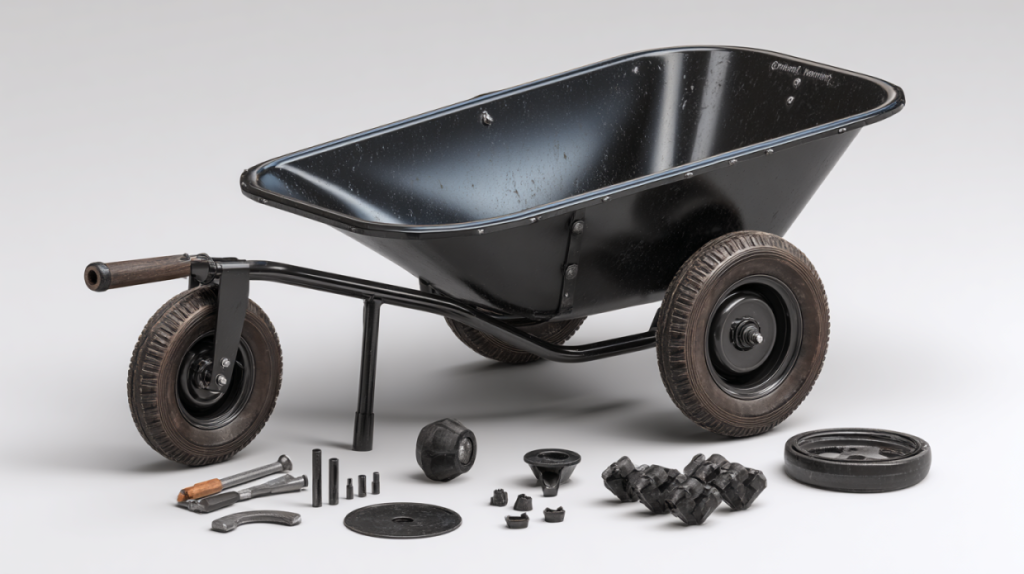

Spare Parts Wheelbarrows Axle Bracket Set
- Heavy-Duty Construction: Built to withstand up to 200 kg (5 feet) of weight, ensuring durability for tough tasks
- Smooth Operation: Equipped with two bearings for a seamless truck experience
- Alloy Steel Frame: Lightweight yet robust, providing longevity and easy maneuverability
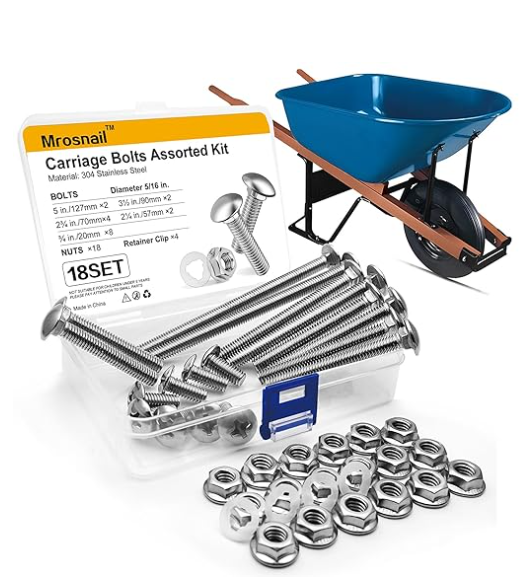
Wheelbarrow Carriage Bolts and Nuts Kit,Stainless Steel Carriage Bolts 5/16-18 5”,3-1/2”,2-3/4”,2-1/4”,3/4”,Flange Hex Nuts,Nylon Retainer Clips,Wheelbarrow Handles Replacement Parts,18Sets
- [Corrosion-Resistant 304 Stainless Steel] Made from durable 304 stainless steel, these carriage bolts are designed for long-term use and corrosion resistance in outdoor and humid environments.
- [Multiple Bolt Lengths for Wheelbarrow Repairs] Includes assorted bolt lengths (5″, 3-1/2″, 2-3/4″, 2-1/2″, 3/4″) to support common wheelbarrow handle and hardware replacements.
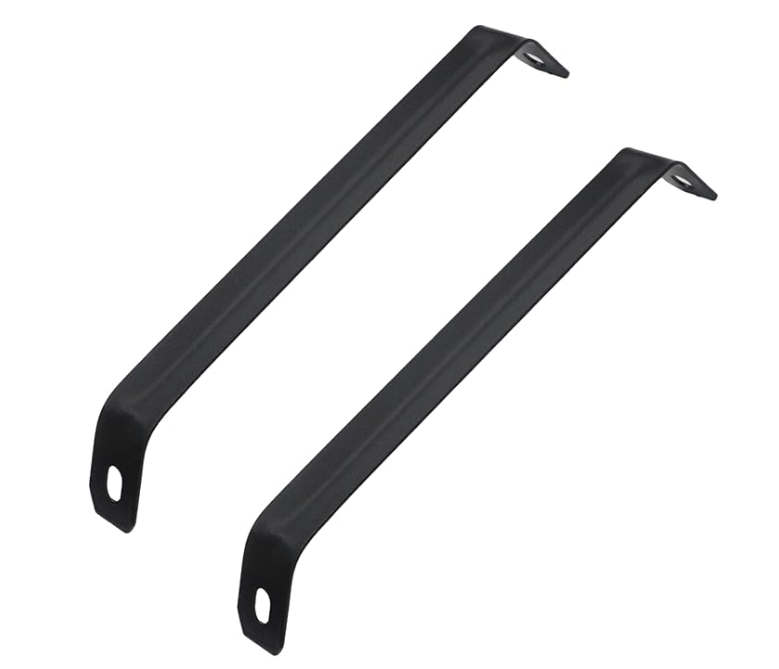
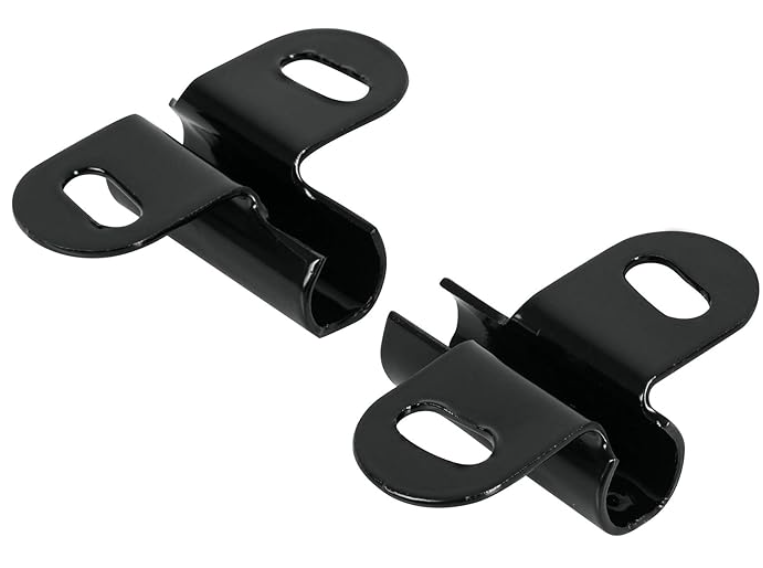
2006-86 Wheelbarrows Front Brace,fit for 6 Cubic Foot True Temper Wheelbarrows,Cart Front Support Brackets,Wheelbarrow Axle Bracket,Compatible with WB 1006, WB 1006FF, WB 2006, WB 2006FF
- 2006-86 Wheelbarrows Front Brace,fit for 6 Cubic Foot True Temper Wheelbarrows,Cart Front Support Brackets,Wheelbarrow Axle Bracket,Compatible with WB 1006, WB 1006FF, WB 2006, WB 2006FF
- Easy Assembly: Featuring pre-drilled holes and all the necessary hardware, assembly is quick and hassle-free. You’ll have it set up in no time, allowing you to focus on your work without delays.
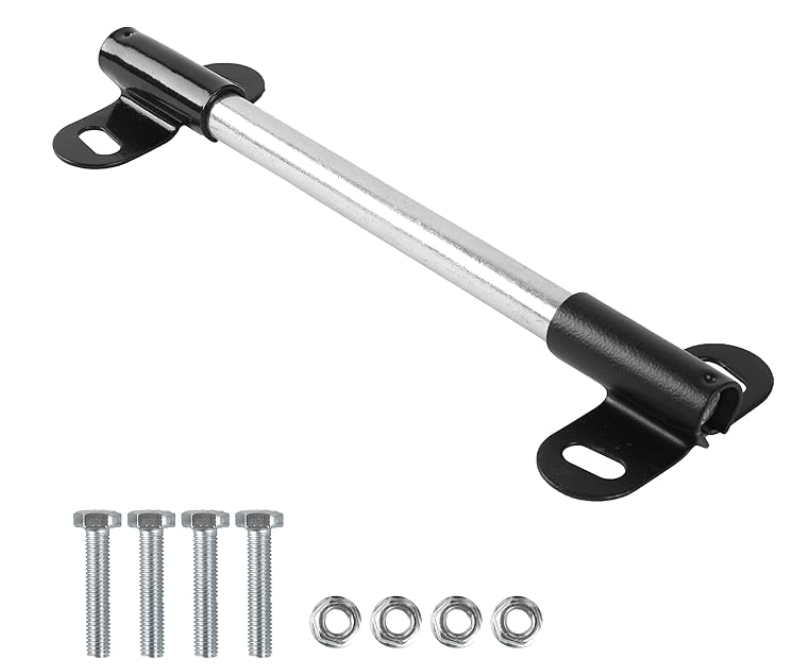
Heavy-Duty Wheelbarrow Axle Bracket Set – 10″ x 0.63″ Shaft and 2.1″ x 3.3″ Brackets – Compatible With 5/8″ Axles – Includes Bolts and Nuts (1 Set)
- WHEELBARROW AXLE BRACKET SET: This set includes 1 piece 10” x 0.63” (5/8”) wheel axle shaft, 2 pieces 2.1” x 3.3” wheelbarrow brackets, and 4 pairs of 60mm bolts and nuts.
- FITS WHEELBARROW 5/8 AXLE SHAFT: This is a universal fit wheelbarrow axle bracket set designed for single-tire wheelbarrows with 5/8” diameter axles.
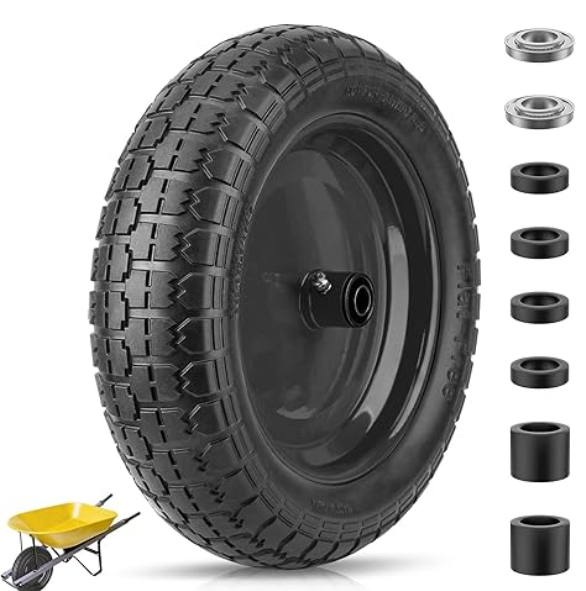
TICONN 4.80/4.00-8 Tire, 14.5″ Flat Free Wheelbarrow Tire and Wheel, Solid Replacement Tires with 3″ Centered Hub, 5/8″ 3/4″ Bearings, Universal Fit 4.80/4.00-8, 3.50/3.00-8, 4.00-6 (Black)
- Solid Tire Construction: This 4.80/4.00-8 dolly wheels is constructed from durable polyurethane foam; It eliminates the need for inflation and the inconvenience of frequent maintenance, offering robust wear resistance and protection against punctures on rough terrains; The recommended using temperature range for these tires is 50°F to 100°F; If the temperature exceeds 100°F, the usage time should not exceed two hours to ensure optimal performance
Everything You Need to Know About Finding, Replacing, and Maintaining Your True Temper Wheelbarrow Components
There’s something almost poetic about the relationship between a gardener and their wheelbarrow. It’s a partnership built on trust, sweat, and countless loads of soil, mulch, and memories. When your trusty True Temper wheelbarrow starts showing signs of wear—a wobbly wheel here, a creaking handle there—it’s not just about replacing parts; it’s about preserving a tool that’s become an extension of your outdoor ambitions.
The truth is, most wheelbarrow owners don’t think much about maintenance until something breaks. One day you’re effortlessly hauling a load of fresh compost to your prize tomato patch, and the next, you’re standing in your driveway staring at a flat tire or a bent handle, wondering whether it’s time to buy a new wheelbarrow entirely. But here’s the thing about True Temper wheelbarrows: they’re built to last, and more importantly, they’re designed to be repaired.
Understanding True Temper wheelbarrow parts isn’t just about fixing what’s broken—it’s about maximizing the lifespan of a quality tool and saving money in the process. Whether you’re dealing with a punctured tire, a wobbly axle, or handles that have seen better days, the right knowledge can transform what seems like a major headache into a straightforward weekend project.
Understanding the Anatomy of Your True Temper Wheelbarrow
Before diving into where to find parts and how to install them, it’s crucial to understand what makes your wheelbarrow tick. True Temper wheelbarrows, like most quality garden carts, consist of several key components that work in harmony to create that smooth, balanced hauling experience we all take for granted.
The wheelbarrow tray forms the heart of the system—it’s where all your materials rest during transport. True Temper offers various tray styles, from traditional steel models perfect for heavy-duty work to poly trays that resist rust and are gentler on delicate materials. Each tray design serves specific purposes, and understanding which type you have is the first step in finding compatible replacement parts.
The wheel assembly might seem straightforward, but it’s actually a sophisticated system comprising the tire, rim, bearings, and axle. True Temper wheelbarrows typically use pneumatic (air-filled) tires that provide excellent shock absorption and maneuverability across various terrains. The standard tire size for most True Temper models falls within the 4.00-6 or 4.00-8 range, though specific dimensions can vary based on your wheelbarrow’s vintage and intended use.
Handles deserve special attention because they’re your primary interface with the wheelbarrow. True Temper designs their handles with ergonomics in mind, using materials and angles that reduce strain during lifting and maneuvering. When handles start to deteriorate, it’s not just about aesthetics—compromised handles can affect your control and potentially lead to accidents or injury.
The frame and hardware—bolts, brackets, and connecting elements—might not be glamorous, but they’re what hold everything together. True Temper uses specific hardware specifications to ensure optimal performance and safety. Using incorrect bolts or brackets might seem like a minor shortcut, but it can compromise the entire wheelbarrow’s structural integrity.
Common True Temper Wheelbarrow Parts and Their Functions
Understanding the most frequently replaced True Temper wheelbarrow parts can help you anticipate maintenance needs and keep spare components on hand. The wheel and tire assembly tops the list of commonly replaced parts, and for good reason. Wheelbarrow tires endure constant abuse—rolling over sharp rocks, navigating through thorny bushes, supporting heavy loads across uneven terrain. Even the highest-quality pneumatic tires will eventually succumb to punctures, dry rot, or simple wear.
When wheelbarrow owners talk about tire replacement, they’re often surprised to learn that you don’t always need to replace the entire wheel assembly. True Temper designs their wheels with replaceable components, meaning you might only need a new tire and inner tube rather than the complete wheel. This modular approach not only saves money but also reduces waste and makes repairs more accessible to the average homeowner.
Handles represent another frequently replaced category, though their failure modes differ significantly from tires. Wooden handles can crack, split, or rot over time, especially when exposed to moisture and temperature fluctuations. Steel handles might bend under excessive load or develop rust that compromises their structural integrity. The beauty of True Temper’s design philosophy is that handles are typically designed as replaceable units, allowing you to restore your wheelbarrow’s functionality without replacing the entire frame.
Axles occupy a middle ground in terms of replacement frequency. They don’t wear out as quickly as tires or handles, but they’re subject to stress and environmental factors that can lead to bending, rust, or bearing failure. A wobbly wheel often indicates axle issues rather than tire problems, and addressing axle problems promptly can prevent more extensive damage to other components.
Hardware components—bolts, nuts, washers, and brackets—might seem insignificant, but they play crucial roles in maintaining structural integrity. Over time, hardware can loosen, corrode, or break, leading to instability or safety issues. The good news is that True Temper uses standard hardware specifications in most cases, making replacement bolts and brackets relatively easy to source.
Where to Buy True Temper Wheelbarrow Parts
The landscape of True Temper wheelbarrow parts availability has evolved significantly over the years, offering multiple channels for finding exactly what you need. Understanding these options can save both time and money while ensuring you get genuine, compatible components.
Major home improvement retailers like Home Depot and Lowe’s stock a selection of True Temper replacement parts, particularly common items like tires, tubes, and basic hardware. These brick-and-mortar locations offer the advantage of seeing parts in person and getting advice from knowledgeable staff members. However, their inventory tends to focus on the most commonly requested items, which means less common or model-specific parts might not be available on the shelf.
Online marketplaces have revolutionized parts availability, offering access to both current and discontinued components. Amazon, eBay, and specialized garden equipment retailers maintain extensive inventories of True Temper parts, often including hard-to-find items for older models. The challenge with online shopping lies in ensuring compatibility—photographs and descriptions don’t always convey the subtle differences between similar-looking parts.
True Temper’s official distribution network provides the most reliable source for authentic replacement parts. Authorized dealers typically have access to current parts catalogs and can help identify the correct components for specific models. While this route might cost slightly more than generic alternatives, the assurance of compatibility and quality often justifies the investment.
Local equipment repair shops represent an often-overlooked resource for True Temper parts. Many of these businesses maintain relationships with distributors and can source parts that might not be readily available through retail channels. Additionally, repair shops often stock generic components that are compatible with True Temper specifications, potentially offering cost-effective alternatives to OEM parts.
Agricultural supply stores cater to customers who use wheelbarrows for serious work, which means they often stock heavy-duty replacement parts and specialized components. These businesses understand the demanding environments where wheelbarrows operate and can recommend parts that might exceed original specifications for enhanced durability.
Finding the Right Parts for Your True Temper Wheelbarrow Model
Identifying the correct True Temper wheelbarrow parts for your specific model requires a systematic approach that combines detective work with practical measurement. The process begins with model identification, which can be more challenging than it initially appears, especially for older wheelbarrows where identifying badges might have faded or disappeared entirely.
True Temper typically includes model information on a label or stamp somewhere on the wheelbarrow frame, often near the front of the tray or on the underside of the frame. This information might include a model number, manufacturing date, and capacity specifications. However, years of outdoor exposure can make these markings difficult to read, requiring creative approaches like angled lighting or gentle cleaning to reveal the information.
When official model markings aren’t available or legible, dimensional measurements become your primary identification tool. Key measurements include tray dimensions (length, width, and depth), overall wheelbarrow length and height, and wheel specifications. The wheel assembly provides particularly useful identification information—tire size, rim diameter, and axle length are typically standardized within model families.
Photography can be invaluable when seeking parts identification assistance. Clear photos of your wheelbarrow from multiple angles, close-ups of specific components, and images of any visible markings can help online retailers, repair shops, or manufacturer representatives identify your model and recommend appropriate parts. Include a common object like a coin or ruler in photos to provide scale reference.
Parts compatibility extends beyond simple dimensional matching. True Temper has evolved their designs over the decades, sometimes making subtle changes that affect interchangeability. A tire that fits perfectly might use a different valve stem type, or a handle that matches the mounting points might have different grip materials or ergonomic features. Understanding these nuances helps ensure that replacement parts not only fit but also maintain the wheelbarrow’s original performance characteristics.
Cross-referencing multiple sources strengthens confidence in parts selection. If the same part number appears in manufacturer documentation, retailer catalogs, and repair shop recommendations, you can be more confident in compatibility. Conversely, discrepancies between sources might indicate the need for additional research or consultation with experts.
Step-by-Step Guide to Replacing Common Parts
Replacing True Temper wheelbarrow parts requires the right combination of tools, technique, and patience. While each component presents unique challenges, understanding general principles and having a systematic approach makes most repairs manageable for the average homeowner.
Wheel replacement represents the most common repair task, and fortunately, it’s also one of the most straightforward. The process begins with securing the wheelbarrow in a stable position—propping the tray end on blocks or sawhorses prevents the wheelbarrow from tipping during wheel removal. Most True Temper wheelbarrows use a simple axle and cotter pin system that allows wheel removal without special tools.
Before removing the old wheel, take photos of the assembly from multiple angles. These reference images prove invaluable during reassembly, especially if the project gets interrupted or if you’re working on an unfamiliar model. Document the position of washers, spacers, and any other small components that might not be obviously placed.
Remove the cotter pin using needle-nose pliers, taking care not to bend or damage the pin if you plan to reuse it. Slide the wheel off the axle, noting the order and orientation of any washers or spacers. Clean the axle thoroughly, removing any dirt, grass clippings, or corrosion that might interfere with the new wheel’s fit.
Installing the new wheel reverses the removal process, but don’t rush this step. Ensure that all washers and spacers are positioned correctly according to your reference photos. The wheel should spin freely without wobbling or binding against the frame. If the wheel doesn’t turn smoothly, double-check the assembly order and verify that the axle isn’t bent or damaged.
Handle replacement requires more disassembly but follows logical steps. True Temper typically secures handles using bolts that pass through the frame and into threaded inserts in the handle ends. Before loosening these bolts, support the tray to prevent it from falling when the handles are removed. Mark the handle positions with tape or chalk to ensure proper alignment during installation.
Remove one handle at a time to maintain better control during the process. Clean the mounting points thoroughly and inspect the hardware for signs of wear or damage. New handles might require slight adjustments to achieve proper alignment—don’t overtighten the mounting bolts initially, as this can crack wooden handles or deform steel ones.
Tray replacement represents the most complex repair task, often requiring complete disassembly of the wheelbarrow. This repair typically makes sense only for high-quality frames with damaged trays, as the labor and parts cost might approach that of a new wheelbarrow. However, for sentimental or heavy-duty models, tray replacement can extend service life significantly.
Tire Repair and Replacement Specifics
Dealing with True Temper wheelbarrow tire issues requires understanding the difference between repair and replacement scenarios. Not every tire problem necessitates a complete replacement—many common issues can be resolved with simple repairs that cost a fraction of new tire expenses.
Pneumatic tire punctures represent the most common tire problem, often caused by thorns, nails, or sharp rocks. Small punctures in the tread area can usually be repaired using standard tire patch kits, following the same procedures used for bicycle or automobile tires. The key to successful puncture repair lies in proper surface preparation and allowing adequate curing time for the patch adhesive.
Remove the wheel from the wheelbarrow and deflate the tire completely before attempting repairs. Locate the puncture by submerging the inflated tube in water and watching for bubbles, or by listening for escaping air. Mark the puncture location clearly, as it can be surprisingly difficult to find once the tire is deflated.
Clean the puncture area thoroughly, removing any embedded debris and roughening the surface slightly with sandpaper. Apply the patch according to the manufacturer’s instructions, paying particular attention to pressure and curing time requirements. A properly applied patch can provide years of reliable service, often outlasting the surrounding tire material.
Valve stem problems present different challenges, as they typically require inner tube replacement rather than simple patching. Valve stems can fail due to age, damage from impact, or simple wear from repeated inflation and deflation cycles. Signs of valve stem failure include difficulty maintaining air pressure even without obvious punctures, or air leaking from around the valve stem base.
Inner tube replacement involves removing the tire from the rim, which requires tire irons or similar tools. Work carefully to avoid damaging the tire during removal, as a good tire with a failed tube represents significant value. Installing a new inner tube requires attention to prevent pinching the tube between the tire and rim during reassembly.
Tire replacement becomes necessary when repair isn’t feasible or cost-effective. Signs that indicate tire replacement include multiple punctures, sidewall damage, excessive tread wear, or cracking due to age and weather exposure. True Temper wheelbarrows typically use common tire sizes, making replacements readily available from multiple sources.
When selecting replacement tires, consider your typical usage patterns and operating environment. Standard pneumatic tires provide the best balance of performance and cost for most applications. However, solid rubber or foam-filled tires eliminate puncture concerns for users who regularly encounter thorns or sharp debris, though they sacrifice some shock absorption and increase rolling resistance.
Hardware and Fasteners: The Unsung Heroes
The role of proper hardware in True Temper wheelbarrow parts maintenance often gets overlooked until something catastrophic happens. Bolts, nuts, washers, and brackets might not seem exciting, but they’re what keeps your wheelbarrow from becoming a collection of unconnected parts during that critical moment when you’re hauling a heavy load.
True Temper uses specific hardware specifications that balance strength, corrosion resistance, and cost considerations. Understanding these specifications helps ensure that replacement hardware maintains the wheelbarrow’s original safety margins and performance characteristics. Generic hardware from the local hardware store might fit physically, but it may not provide the same reliability under stress.
Bolt grades matter more than most people realize. The numbers and markings on bolt heads indicate their tensile strength and material composition. Using a lower-grade bolt in a critical application can lead to failure under normal loads, potentially causing accidents or damage. Conversely, over-specifying hardware adds unnecessary cost without meaningful benefit.
Corrosion represents the primary enemy of wheelbarrow hardware. The combination of moisture, soil, fertilizers, and temperature fluctuations creates an aggressive environment that can quickly degrade inappropriate fasteners. Galvanized, stainless steel, or specially coated hardware provides much better longevity than plain steel alternatives, though at higher initial cost.
Thread pitch and length specifications require careful attention during replacement. A bolt that’s too long might interfere with moving parts or bottom out before achieving proper clamping force. Conversely, bolts that are too short might not provide adequate thread engagement, compromising strength and reliability.
Washers serve multiple functions beyond simply distributing load. They can provide corrosion barriers, prevent nuts from loosening due to vibration, and protect soft materials from damage during tightening. Lock washers, split washers, and thread-locking compounds each address specific failure modes and should be used according to the original design intent.
Regular hardware inspection should be part of routine wheelbarrow maintenance. Look for loose fasteners, corrosion, damage, or signs of stress. Catching hardware problems early often prevents more extensive damage to other components. A loose handle bolt might seem minor, but it can lead to handle failure at an inopportune moment.
Assembly and Installation Best Practices
Proper assembly techniques significantly impact the longevity and safety of True Temper wheelbarrow parts. While most repairs don’t require advanced mechanical skills, following professional practices ensures reliable results and prevents common mistakes that can lead to premature failure or safety issues.
Tool selection plays a crucial role in successful assembly. Using appropriate tools not only makes the job easier but also prevents damage to components during installation. Invest in quality wrenches, sockets, and screwdrivers that fit properly rather than relying on adjustable tools that can slip and round off fastener heads.
Torque specifications might not be published for wheelbarrow assembly, but understanding proper tightening techniques prevents both under-tightening and over-tightening problems. Fasteners should be snug enough to prevent loosening under normal use but not so tight that they damage components or make future disassembly difficult.
Sequential tightening becomes important when multiple fasteners secure a single component. Rather than fully tightening one fastener before moving to the next, gradually increase tension on all fasteners in a criss-cross pattern. This technique ensures even stress distribution and prevents binding or distortion during assembly.
Thread preparation can significantly improve assembly quality and future serviceability. Clean threads remove old debris and corrosion that can interfere with proper fastener seating. A light coating of anti-seize compound prevents galling and makes future disassembly much easier, especially valuable for fasteners that might not be disturbed for years.
Alignment verification ensures that components fit together as designed rather than being forced into position. Parts that require excessive force during assembly often indicate alignment problems, missing components, or incorrect parts selection. Resolving these issues before final tightening prevents stress concentrations that can lead to premature failure.
Break-in procedures might seem unnecessary for wheelbarrow repairs, but they can identify problems before they become serious. After completing any significant repair or replacement, operate the wheelbarrow with light loads initially and inspect the work after the first few uses. This practice often reveals minor adjustments needed for optimal performance.
Maintenance Tips to Extend Parts Life
Proactive maintenance represents the most cost-effective approach to True Temper wheelbarrow parts management. Regular care and attention can dramatically extend component life, reducing both repair frequency and replacement costs while maintaining reliable performance when you need it most.
Cleaning might seem obvious, but proper cleaning techniques and frequency make significant differences in parts longevity. Simply hosing off visible dirt doesn’t address the corrosive salts, fertilizers, and organic acids that can accumulate in crevices and joints. Thorough cleaning includes removing the wheel periodically to clean the axle and bearing areas where debris tends to accumulate.
Lubrication requirements vary by component and operating environment. Moving parts like wheel bearings and pivot points benefit from appropriate lubricants, but over-lubrication can attract dirt and debris that accelerate wear. Use lubricants specified for outdoor equipment applications, as these formulations resist washout and provide better corrosion protection.
Storage practices significantly impact parts life, particularly for wheelbarrows that see seasonal use. Indoor storage provides the best protection, but covered outdoor storage can be adequate with proper preparation. Inflate tires to recommended pressure before storage to prevent flat spots and cracking. Clean and dry all surfaces to prevent corrosion during storage periods.
Load management prevents premature wear and catastrophic failures. While True Temper wheelbarrows are built tough, consistently exceeding capacity ratings accelerates wear on all components. Understanding your wheelbarrow’s limitations and respecting them ensures that parts reach their intended service life.
Inspection routines catch problems early when repairs are typically simpler and less expensive. Monthly inspections during active use periods should include checking tire pressure, examining handles for cracks or looseness, and testing wheel rotation for smoothness. Seasonal inspections can be more thorough, including disassembly and cleaning of key components.
Environmental considerations affect maintenance requirements and parts selection. Coastal areas with salt air require more frequent cleaning and corrosion-resistant hardware. Areas with extreme temperature variations might need more frequent hardware inspection due to thermal cycling effects. Understanding your specific operating environment helps optimize maintenance schedules and parts selection.
Cost Considerations and Budgeting
Understanding the economics of True Temper wheelbarrow parts helps make informed decisions about repair versus replacement and guides investment in quality components. While initial cost comparisons might favor the cheapest options, total cost of ownership often tells a different story.
OEM (Original Equipment Manufacturer) parts typically carry premium pricing compared to aftermarket alternatives, but they also provide assured compatibility and performance. The value proposition of OEM parts becomes particularly compelling for critical components where failure could cause safety issues or damage to other parts.
Generic or aftermarket parts can provide significant cost savings, especially for commonly standardized components like tires, tubes, and basic hardware. However, quality varies widely among aftermarket suppliers, making research and supplier selection crucial. Reading reviews, checking return policies, and understanding warranty terms helps identify reliable sources for generic parts.
Repair versus replacement decisions require honest assessment of the wheelbarrow’s overall condition and your long-term plans. Investing in expensive parts for a wheelbarrow with multiple failing components might not make economic sense. Conversely, a high-quality wheelbarrow with a single failed component often justifies premium replacement parts.
Bulk purchasing strategies can reduce per-unit costs for frequently replaced items like inner tubes, patch kits, and hardware. If you maintain multiple wheelbarrows or help neighbors with repairs, buying common parts in larger quantities provides cost advantages while ensuring availability when needed.
Labor costs deserve consideration even for do-it-yourself repairs. While you might not pay direct labor charges, your time has value, and complex repairs might require multiple attempts or specialized tools. Sometimes paying for professional installation makes sense, particularly for challenging repairs or when warranty coverage is important.
Preventive maintenance investments often provide the best return on investment. High-quality lubricants, covers, and storage solutions cost relatively little but can significantly extend parts life. The money spent on prevention typically prevents much larger repair or replacement expenses later.
Warranty Information and Support
Understanding warranty coverage for True Temper wheelbarrow parts helps protect your investment and ensures access to manufacturer support when problems arise. Warranty terms vary significantly between OEM parts, aftermarket alternatives, and complete wheelbarrow purchases, making careful review of coverage details important.
True Temper typically provides warranty coverage for manufacturing defects in original equipment parts, but coverage periods and terms can vary by component type and purchase date. Tires might have shorter warranty periods due to wear considerations, while structural components like frames and handles often receive longer coverage.
Warranty activation and documentation requirements vary by manufacturer and retailer. Some warranties require product registration within specific timeframes, while others become effective automatically upon purchase. Keeping purchase receipts, warranty documentation, and product registration information in a safe, accessible location prevents coverage disputes later.
Coverage limitations and exclusions deserve careful attention to avoid surprises when warranty claims become necessary. Normal wear, damage from misuse, and environmental factors might be specifically excluded from coverage. Understanding these limitations helps set appropriate expectations and guides maintenance practices that preserve warranty coverage.
Claims processes can vary significantly between manufacturers and retailers. Some companies handle warranty claims directly, while others require working through authorized dealers or retailers. Understanding the claims process before you need it reduces stress and delays when warranty service becomes necessary.
Third-party warranty options might be available through retailers or insurance providers, potentially extending coverage beyond manufacturer warranties. These extended warranties require careful evaluation of cost versus benefit, considering the reliability history of your specific equipment and your risk tolerance for repair expenses.
Technical support availability represents an often-overlooked aspect of warranty coverage. Manufacturers with strong technical support can help with installation questions, troubleshooting, and parts identification even for out-of-warranty products. This support can be invaluable for complex repairs or unusual problems.
Compatibility with Other Brands
The question of True Temper wheelbarrow parts compatibility with other brands frequently arises, particularly when seeking cost-effective alternatives or when True Temper parts aren’t readily available. Understanding compatibility principles helps expand sourcing options while avoiding costly mistakes.
Industry standardization affects compatibility in predictable ways. Common tire sizes, standard thread pitches, and widely used bearing specifications mean that many components are interchangeable between brands. However, subtle differences in dimensions, materials, or design details can affect fit and performance even when parts appear identical.
Dimensional compatibility represents the most obvious compatibility factor, but it’s not the only consideration. A tire that fits the rim perfectly might use a different valve stem type, affecting tube selection and inflation equipment. Similarly, handles that match mounting hole spacing might have different grip materials or ergonomic features that affect usability.
Performance characteristics can vary between seemingly identical parts from different manufacturers. Generic tires might fit perfectly but provide different rolling resistance, load capacity, or puncture resistance compared to OEM parts. Understanding these performance differences helps set appropriate expectations and guides selection decisions.
Safety considerations become paramount when mixing parts from different manufacturers. Load ratings, material specifications, and design factors that ensure safe operation might not be maintained when substituting non-OEM parts. Critical components that affect structural integrity or user safety deserve extra caution during parts selection.
Testing and validation approaches can help verify compatibility before committing to extensive parts purchases. Buying single samples of questionable parts allows testing without major investment. Document what works and what doesn’t to guide future purchases and help other wheelbarrow owners in similar situations.
Quality variation among generic parts suppliers requires careful supplier selection and quality verification. Reading reviews, checking return policies, and starting with small orders helps identify reliable sources for non-OEM parts. Building relationships with quality suppliers provides long-term benefits for ongoing maintenance needs.
Conclusion: Keeping Your True Temper Wheelbarrow Rolling Forward
The world of True Temper wheelbarrow parts might seem complex at first glance, but it’s really about understanding your tool, respecting its design, and taking proactive steps to maintain its performance. Every wheelbarrow has a story—the early morning trips to the compost pile, the weekend projects that transformed your landscape, the countless loads that turned dreams into reality.
When you invest time and effort into proper maintenance and quality repairs, you’re not just fixing a wheelbarrow; you’re preserving a trusted partner in your outdoor endeavors. The satisfaction of diagnosing a problem, finding the right parts, and completing a successful repair extends far beyond the money saved. It’s about self-reliance, craftsmanship, and the deep satisfaction that comes from keeping quality tools in working condition.
The key to successful True Temper wheelbarrow parts management lies in developing a systematic approach that combines regular maintenance, prompt attention to problems, and investment in quality components when repairs become necessary. Understanding your options, knowing where to find reliable parts, and mastering basic repair techniques transforms wheelbarrow ownership from a source of frustration into an opportunity for skill development and cost savings.
Remember that every repair is a learning opportunity. Document what works, photograph assemblies before disassembly, and don’t hesitate to seek advice when facing unfamiliar challenges. The knowledge gained from hands-on experience with your wheelbarrow will serve you well across many other equipment maintenance tasks.
Your True Temper wheelbarrow represents quality engineering designed to provide years of reliable service. With proper care, quality parts, and attention to maintenance details, there’s no reason it can’t continue serving your outdoor projects for decades to come. The investment in understanding and maintaining your wheelbarrow pays dividends in reliability, performance, and the simple satisfaction of a job well done.
Whether you’re hauling soil for a new garden bed, clearing debris after a storm, or moving materials for that dream patio project, a well-maintained wheelbarrow with quality parts makes every task easier and more enjoyable. Take care of your wheelbarrow, and it will take care of you—one load at a time, one project at a time, one season at a time.