
From Flat to Fantastic: Your Ultimate Resource for True Temper Wheelbarrow Tire Selection, Replacement, and Maintenance
When your trusty wheelbarrow starts wobbling across the yard like a drunken sailor, chances are it’s time to give some serious attention to that True Temper wheelbarrow tire. Whether you’re hauling mulch for your prize-winning petunias or transporting concrete blocks for that backyard project you’ve been procrastinating on since 2019, a reliable tire is the unsung hero that keeps your wheelbarrow rolling smoothly.
True Temper has been a stalwart in the wheelbarrow industry for decades, and their tires are designed to handle everything from delicate seedlings to hefty construction materials. But like all good things, even the most robust True Temper wheelbarrow tire will eventually need replacement. The question isn’t if you’ll need a new tire – it’s when, and more importantly, how to navigate the sometimes confusing world of wheelbarrow tire replacement.
Understanding Your True Temper Wheelbarrow Tire: The Foundation of Functionality
Before diving into the nitty-gritty of replacement options, it’s crucial to understand what makes a True Temper wheelbarrow tire tick. These tires are engineered specifically for the unique demands of wheelbarrow operation, which differs significantly from other wheeled vehicles.
The typical True Temper wheelbarrow comes equipped with either an air-filled pneumatic tire or a solid foam-filled tire, depending on the model and intended use. The pneumatic versions offer superior shock absorption and a smoother ride over rough terrain, making them ideal for navigating rocky garden paths or uneven construction sites. The cushioning effect of air-filled tires reduces the jarring motion that can make hauling heavy loads a back-breaking endeavor.
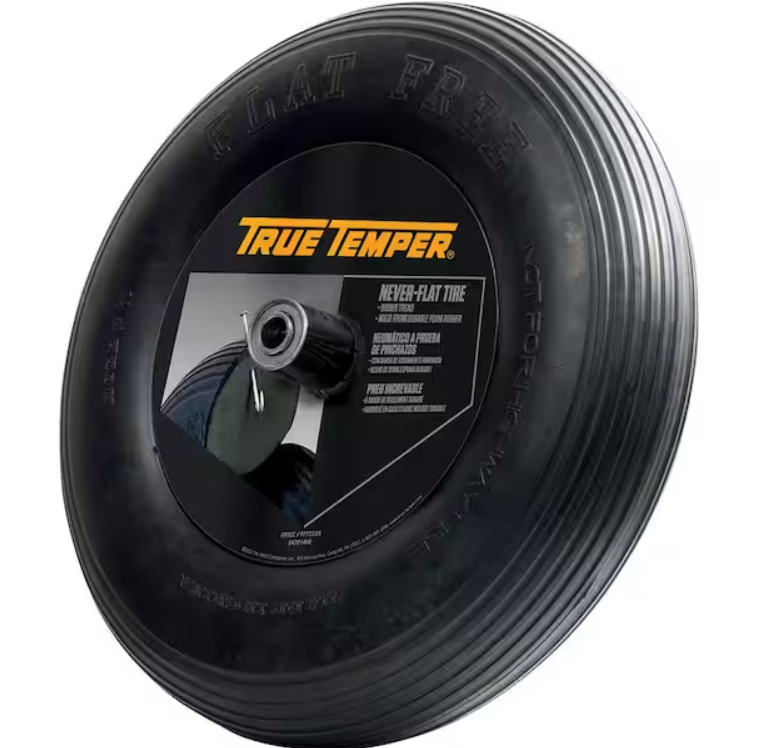
On the flip side, solid tires eliminate the frustration of flat tires entirely. These puncture-resistant alternatives maintain consistent performance regardless of thorns, nails, or sharp debris that might puncture a traditional air-filled tire. The trade-off comes in ride quality – solid tires provide a firmer, more jarring experience over bumpy surfaces.
Sizing Up Your Replacement: What Size Tire Does a True Temper Wheelbarrow Use?
One of the most critical aspects of selecting the right replacement True Temper wheelbarrow tire is getting the sizing correct. True Temper wheelbarrows typically use one of several standard tire sizes, with the most common being 4.00-6, 4.80/4.00-8, and 16-inch diameter options.
The sizing nomenclature might seem like ancient hieroglyphics at first glance, but it’s actually quite straightforward once you understand the system. The first number represents the tire width in inches, while the second number indicates the rim diameter. For instance, a 4.00-6 tire is 4 inches wide and fits on a 6-inch diameter rim.
To determine your specific tire size, look for markings molded into the sidewall of your existing tire. These markings will display the size information clearly, though years of use and weathering might make them challenging to read. If the sidewall markings are illegible, measuring the tire diameter and width with a tape measure will provide the necessary dimensions for ordering a replacement.
It’s worth noting that True Temper has used different tire sizes across their various wheelbarrow models over the years. Older models might have different specifications than newer ones, so don’t assume that all True Temper wheelbarrows use identical tires. When in doubt, contact True Temper customer service with your wheelbarrow model number for definitive sizing information.
The Great Tire Hunt: Where Can I Buy a True Temper Wheelbarrow Tire Replacement?
Finding a replacement True Temper wheelbarrow tire has become significantly easier in recent years, thanks to both expanded retail availability and online shopping options. The key is knowing where to look and what to expect in terms of pricing and availability.
Hardware stores represent the most traditional source for wheelbarrow tire replacements. Major chains like Home Depot, Lowe’s, and Menards typically stock True Temper replacement parts, including tires. The advantage of shopping at physical stores is the ability to bring your old tire for comparison and get hands-on assistance from knowledgeable staff members who can ensure proper fitment.
Local farm and garden supply stores often carry an impressive selection of wheelbarrow tires, including True Temper-specific options. These smaller retailers frequently have staff members with extensive experience in wheelbarrow repair and can offer valuable insights about tire performance and longevity.
Online retailers have revolutionized the replacement tire market, offering extensive selection and competitive pricing. Major e-commerce platforms provide access to both genuine True Temper replacement tires and compatible alternatives from other manufacturers. The convenience of doorstep delivery makes online shopping particularly appealing for busy homeowners and contractors.
Specialty tool and equipment dealers represent another excellent source for True Temper wheelbarrow tire replacements. These businesses often maintain relationships with True Temper and can source hard-to-find parts for older wheelbarrow models. While their prices might be slightly higher than big-box retailers, the expertise and specialized service often justify the additional cost.
The Universal Question: Can I Use a Universal Tire for My True Temper Wheelbarrow?
The compatibility question looms large in many wheelbarrow owners’ minds: can a universal replacement tire work as well as a genuine True Temper wheelbarrow tire? The answer is nuanced and depends on several factors including your specific wheelbarrow model, intended use, and performance expectations.
Universal wheelbarrow tires are designed to fit multiple wheelbarrow brands and models, making them a popular choice for cost-conscious consumers. These tires typically offer adequate performance for light to moderate use and can represent significant savings compared to brand-specific replacements. Many universal tires feature similar construction and materials to their brand-name counterparts, providing reasonable durability and functionality.
However, there are important considerations when choosing universal alternatives. Fit tolerance might be less precise than genuine True Temper parts, potentially leading to slight wobbling or premature wear. The bearing housing, axle fit, and overall wheel assembly compatibility might require minor adjustments or modifications.
For heavy-duty commercial applications or frequent use scenarios, genuine True Temper wheelbarrow tire replacements often provide superior longevity and performance. The engineering specifications and quality control standards typically exceed those of generic alternatives, resulting in better overall value despite higher upfront costs.
The decision ultimately depends on your specific needs and budget constraints. Weekend gardeners and occasional users might find universal tires perfectly adequate, while contractors and serious landscapers often benefit from investing in genuine True Temper replacements.
Air-Filled vs. Solid: Understanding Your True Temper Wheelbarrow Tire Options
The choice between air-filled and solid True Temper wheelbarrow tire options represents one of the most significant decisions in the replacement process. Each type offers distinct advantages and limitations that can dramatically impact your wheelbarrow’s performance and your overall satisfaction.
Pneumatic air-filled tires provide superior shock absorption and ride quality, making them ideal for navigating rough terrain with heavy or delicate loads. The air cushion reduces vibration transmission to the wheelbarrow handles, minimizing operator fatigue during extended use. These tires also offer excellent traction on various surfaces, from muddy garden paths to loose gravel driveways.
The primary drawback of air-filled tires is their susceptibility to punctures and slow leaks. Construction sites, thorny vegetation, and sharp debris can quickly render a pneumatic tire useless, often at the most inconvenient times. Regular maintenance including pressure checks and occasional patching becomes part of the ownership experience.
Solid foam-filled tires eliminate flat tire frustrations entirely while maintaining reasonable performance characteristics. Modern solid tires incorporate advanced polymer compounds that provide adequate shock absorption while remaining puncture-proof. These tires maintain consistent performance regardless of storage conditions or environmental factors.
The trade-off with solid tires comes in ride quality and weight. Solid tires provide a firmer, more jarring experience over rough surfaces, potentially increasing operator fatigue during extended use. They also add weight to the wheelbarrow, which might be noticeable when maneuvering empty wheelbarrows or lifting them for storage.
Diagnosing Tire Troubles: How Do I Know if My True Temper Wheelbarrow Tire Needs Replacement?
Recognizing when your True Temper wheelbarrow tire needs replacement requires attention to several key indicators that signal declining performance or impending failure. Early identification of tire problems can prevent more serious issues and maintain optimal wheelbarrow functionality.
Visual inspection represents the first line of defense in tire condition assessment. Look for obvious signs of wear including bald spots, cracking, bulging, or visible cord material showing through worn tread areas. Sidewall damage such as cuts, punctures, or weathering cracks indicates compromised structural integrity that could lead to sudden failure.
Tread depth measurement provides objective data about tire condition. Using a penny or specialized tread depth gauge, measure the remaining tread depth at multiple points around the tire circumference. Significant variations in tread depth indicate uneven wear patterns that might signal alignment issues or improper inflation pressure.
Performance indicators offer practical insights into tire condition. Difficulty steering, excessive vibration, or wobbling during operation suggest tire problems that warrant investigation. Increased effort required to push loaded wheelbarrows might indicate low air pressure or tire deformation affecting rolling efficiency.
Load-carrying capacity changes can signal tire deterioration. If your wheelbarrow seems less stable with typical loads or requires more frequent pressure adjustments, the tire might be developing internal damage or age-related deterioration affecting its structural integrity.
The Replacement Process: How Do I Replace the Tire on a True Temper Wheelbarrow?
Replacing a True Temper wheelbarrow tire might seem daunting at first, but with proper preparation and the right tools, it’s a manageable DIY project that can save significant money compared to professional repair services. Understanding the process helps ensure successful completion and optimal performance from your new tire.
Tool preparation is crucial for efficient tire replacement. Essential tools include adjustable wrenches or socket sets for axle removal, tire irons or large screwdrivers for tire mounting, and potentially a tire pressure gauge and pump for pneumatic tires. Having all necessary tools readily available prevents frustrating delays mid-project.
The replacement process begins with wheelbarrow preparation. Empty the wheelbarrow completely and position it on a stable, level surface with adequate working space around the wheel assembly. Some wheelbarrow designs require tipping or inverting for optimal access to the wheel assembly.
Axle removal represents the first mechanical step in tire replacement. Most True Temper wheelbarrows use either a straight-through axle secured with cotter pins or a bolt-on axle system. Carefully remove securing hardware, noting the original assembly order for proper reassembly. Clean accumulated dirt and debris from axle components during disassembly.
Tire removal from the rim requires patience and proper technique to avoid damage to reusable components. For pneumatic tires, completely deflate the tire before attempting removal. Use tire irons or large screwdrivers to work the tire bead over the rim edge, taking care not to damage the rim or puncture the new tire during the process.
New tire installation reverses the removal process with attention to proper seating and alignment. Ensure the tire bead seats completely around the rim circumference before inflating pneumatic tires. Gradual inflation allows the tire to seat properly and prevents sudden blowouts during initial pressurization.
Inflation and Maintenance: How Do I Inflate a True Temper Wheelbarrow Tire?
Proper inflation of your True Temper wheelbarrow tire is essential for optimal performance, longevity, and safe operation. Understanding correct pressure specifications and inflation techniques ensures your wheelbarrow operates efficiently while minimizing premature tire wear.
Pressure specifications vary by tire size and intended use, but most True Temper wheelbarrow tires operate optimally between 20-30 PSI. Check the tire sidewall for manufacturer recommendations, as these specifications provide the best balance of load-carrying capacity and ride comfort. Over-inflation can lead to premature center tread wear and harsh ride quality, while under-inflation causes sidewall flexing, edge wear, and increased rolling resistance.
Inflation equipment selection impacts both convenience and accuracy. Standard automotive tire gauges and pumps work perfectly for wheelbarrow tires, though smaller gauges might provide better accuracy in the typical pressure range. Hand pumps, electric compressors, or service station air supplies all represent viable inflation options.
The inflation process requires attention to proper valve stem alignment and gradual pressure increases. Remove the valve cap and ensure the valve stem is free of debris before connecting the pump or gauge. Add air gradually while monitoring pressure frequently to avoid over-inflation. Most wheelbarrow tires require relatively low volumes of air, making over-inflation surprisingly easy to achieve.
Regular pressure maintenance extends tire life and maintains optimal performance. Check tire pressure monthly or before heavy use periods, as temperature changes and normal permeation cause gradual pressure loss. Maintaining proper pressure prevents premature wear patterns and ensures maximum load-carrying capacity.
Troubleshooting Flat Tires: How Do I Fix a Flat True Temper Wheelbarrow Tire?
Dealing with a flat True Temper wheelbarrow tire is an inevitable part of wheelbarrow ownership, but understanding proper repair techniques can restore functionality quickly and economically. The repair approach depends on the type of damage and tire construction.
Puncture identification is the critical first step in tire repair. Inflate the tire partially and listen for escaping air, or submerge the tire in water to locate bubbling areas indicating puncture sites. Mark puncture locations with chalk or permanent marker before deflating the tire for repair. Multiple punctures or large tears might indicate the need for tire replacement rather than repair.
Small punctures in the tread area respond well to standard tire patch kits designed for wheelbarrow or lawn mower tires. Clean the puncture area thoroughly with sandpaper or a wire brush to ensure proper patch adhesion. Apply rubber cement according to kit instructions and allow proper curing time before inflating the repaired tire.
Sidewall damage presents more challenging repair scenarios. Small sidewall punctures might be repairable with specialized sidewall patches, but large cuts or tears typically require tire replacement. Sidewall repairs should be considered temporary solutions, as these areas experience significant flexing stress during operation.
Valve stem problems cause slow leaks that can be frustrating to diagnose. Replace damaged or deteriorated valve stems using standard automotive replacement parts. Ensure proper seating and use valve stem tools to achieve secure installation without over-tightening.
Weight Capacity and Performance: How Much Weight Can a True Temper Wheelbarrow Tire Handle?
Understanding the weight limitations of your True Temper wheelbarrow tire is crucial for safe operation and maximum tire longevity. Exceeding weight capacity can lead to premature tire failure, handling problems, and potential safety hazards during operation.
Standard True Temper wheelbarrow tires typically handle loads between 200-400 pounds, depending on tire size and construction. Pneumatic tires generally offer higher load capacities than solid alternatives due to their ability to distribute weight through air pressure. However, proper inflation is essential for achieving rated capacity.
Load distribution affects tire performance significantly. Concentrated loads create higher stress points than evenly distributed materials, potentially exceeding local tire capacity even when total weight remains within specifications. Avoid loading wheelbarrows with extremely dense materials concentrated in small areas.
Operating conditions influence effective weight capacity. Smooth, level surfaces allow maximum load capacity, while rough terrain, slopes, or soft ground reduce practical weight limits due to increased tire stress and potential for rim damage.
Heavy-duty applications might require upgraded tires designed for increased weight capacity. True Temper offers reinforced tire options for commercial and industrial applications where standard tires might prove inadequate. These heavy-duty tires feature enhanced construction and materials designed for demanding use scenarios.
Puncture Resistance and Durability: Are True Temper Wheelbarrow Tires Puncture-Resistant?
The puncture resistance of True Temper wheelbarrow tire options varies significantly based on tire type and construction, making it important to understand the available options and their relative merits for different applications.
Standard pneumatic tires offer limited puncture resistance, relying primarily on rubber thickness and tread design for protection. While adequate for typical residential use, these tires remain vulnerable to thorns, nails, glass, and other sharp debris commonly encountered in construction and landscaping environments.
Reinforced pneumatic tires incorporate additional protective layers or materials designed to resist penetration from sharp objects. These tires typically feature thicker rubber compounds, additional ply layers, or specialized puncture-resistant materials integrated into the tire construction. The added protection comes with increased weight and cost but significantly reduces flat tire incidents.
Solid foam-filled tires eliminate puncture concerns entirely while maintaining reasonable performance characteristics. These tires use polyurethane or similar polymer compounds to provide cushioning and support without the risk of deflation. Modern solid tire formulations offer improved shock absorption compared to earlier solid tire designs.
No-flat tire systems represent the ultimate in puncture protection. These systems use specialized foam cores or semi-pneumatic designs that maintain functionality even after puncture damage. While initially more expensive than standard options, the elimination of downtime and repair costs often justifies the investment for heavy-use applications.
Cost Considerations: What is the Price of a True Temper Wheelbarrow Tire?
Understanding the pricing landscape for True Temper wheelbarrow tire replacements helps budget for this inevitable maintenance expense while ensuring you get appropriate value for your investment. Prices vary significantly based on tire type, size, and source.
Basic pneumatic tire replacements typically range from $15-35 for standard sizes, making them an economical option for occasional use applications. Generic universal tires often fall at the lower end of this range, while genuine True Temper replacements command premium pricing due to brand recognition and guaranteed compatibility.
Solid foam-filled tires generally cost $25-50, reflecting their more complex construction and materials. The higher upfront cost is often offset by elimination of maintenance requirements and the absence of flat tire replacements over the tire’s service life.
Heavy-duty and puncture-resistant options can range from $40-80 or more, depending on the specific features and construction. These premium tires target commercial users and demanding applications where downtime costs exceed the price differential.
Complete wheel assemblies including tire, rim, and bearings typically cost $35-75, sometimes representing better value than tire-only replacements when rim or bearing damage exists. Pre-assembled units also eliminate mounting challenges and ensure proper component compatibility.
Compatibility Across Brands: Are True Temper Wheelbarrow Tires Compatible with Other Brands?
The question of cross-brand compatibility for True Temper wheelbarrow tire replacements is complex, involving standardization trends, manufacturing variations, and practical installation considerations that affect successful substitution.
Industry standardization has led to significant compatibility between wheelbarrow tire brands for common sizes and mounting configurations. Standard sizes like 4.00-6 and 4.80/4.00-8 are produced by multiple manufacturers with consistent dimensions and mounting specifications, enabling successful cross-brand substitution in many cases.
Rim compatibility represents the primary compatibility concern. While tire sizes might be standardized, rim designs, bearing configurations, and axle mounting systems can vary between wheelbarrow manufacturers. True Temper wheelbarrows use specific rim profiles and bearing arrangements that might not match other brands exactly.
Mounting hardware compatibility varies significantly between wheelbarrow brands. Axle diameters, bearing sizes, and securing methods differ between manufacturers, potentially requiring hardware modifications or adaptations for successful tire replacement with non-True Temper components.
Performance considerations extend beyond simple physical compatibility. True Temper designs their tires for specific weight distributions, handling characteristics, and durability requirements that might not align perfectly with other wheelbarrow brands. While functional compatibility might exist, optimal performance often requires brand-matched components.
Tread Patterns and Performance: What is the Tread Pattern on a True Temper Wheelbarrow Tire?
The tread pattern on a True Temper wheelbarrow tire plays a crucial role in traction, stability, and overall performance across different terrain types and loading conditions. Understanding tread design helps select appropriate replacements for specific applications.
Standard True Temper wheelbarrow tires typically feature moderate lug patterns designed for versatility across various surfaces. The tread design balances traction needs with rolling efficiency, providing adequate grip on grass, dirt, and pavement without excessive rolling resistance that would make pushing difficult.
Lug spacing and depth affect performance in specific conditions. Widely spaced, deep lugs excel in soft soil and muddy conditions by providing maximum bite and self-cleaning action. However, these aggressive tread patterns increase rolling resistance on hard surfaces and can create jarring ride quality over pavement.
Shallow, closely spaced tread patterns optimize performance on hard surfaces while maintaining adequate traction for typical wheelbarrow applications. These designs minimize rolling resistance and provide smoother operation over pavement and concrete, making them ideal for construction and urban applications.
All-terrain tread designs attempt to balance performance across multiple surface types. These patterns typically feature moderate lug depth with strategic siping and pattern variations designed to provide acceptable performance in diverse conditions without excelling in any specific environment.
Upgrading Options: Can I Upgrade My True Temper Wheelbarrow to a Solid Tire?
Upgrading from pneumatic to solid tires represents a popular modification for True Temper wheelbarrow tire users seeking to eliminate flat tire problems while maintaining reasonable performance. The upgrade process involves several considerations and potential modifications.
Compatibility assessment is the first step in evaluating solid tire upgrades. Most True Temper wheelbarrows can accommodate solid tire replacements using existing rim and axle components. However, solid tires might have different mounting requirements or dimensional specifications that require verification before purchase.
Weight considerations affect wheelbarrow handling characteristics after solid tire installation. Solid tires typically weigh more than their pneumatic counterparts, adding several pounds to the wheelbarrow’s empty weight. This additional weight might be noticeable during maneuvering and lifting operations.
Performance trade-offs accompany solid tire upgrades. While puncture resistance improves dramatically, ride quality becomes firmer and less forgiving over rough terrain. The absence of air cushioning increases vibration transmission and can make hauling delicate materials more challenging.
Load capacity might change with solid tire installation. Some solid tires offer higher load ratings than standard pneumatic alternatives, while others might have reduced capacity. Verify load specifications to ensure the upgraded tire meets your application requirements.
Retail Availability: Are True Temper Replacement Tires Available in Stores?
The retail availability of True Temper wheelbarrow tire replacements has improved significantly in recent years, with multiple distribution channels offering convenient access to replacement parts for homeowners and professionals.
Major home improvement retailers typically stock True Temper replacement tires in common sizes. Home Depot, Lowe’s, and similar chains maintain seasonal inventory focusing on popular tire sizes and configurations. Spring and summer months generally offer the best selection as demand increases with gardening and landscaping activity.
Local hardware stores often provide excellent service for wheelbarrow tire replacements, including special ordering capabilities for less common sizes. These smaller retailers frequently maintain relationships with True Temper distributors and can source specific parts that might not be available at larger chains.
Farm and garden supply stores represent another excellent source for True Temper replacement tires. These specialized retailers understand wheelbarrow applications and typically maintain comprehensive inventories of replacement parts including tires, rims, and hardware components.
Tire shops and equipment dealers sometimes stock wheelbarrow tires alongside their automotive inventory. While not their primary focus, these businesses often have tire mounting expertise and equipment that can simplify the replacement process for customers who prefer professional installation.
Tool Requirements: What Tools Are Needed to Replace a True Temper Wheelbarrow Tire?
Successfully replacing a True Temper wheelbarrow tire requires specific tools and equipment to ensure safe, efficient completion of the project while avoiding damage to components or injury to the operator.
Basic hand tools form the foundation of any tire replacement project. Adjustable wrenches or socket sets are essential for axle removal and installation. Sizes typically range from 1/2 inch to 3/4 inch, depending on your specific wheelbarrow model. Having both metric and standard sizes available prevents delays if your wheelbarrow uses non-standard hardware.
Tire mounting tools facilitate safe tire removal and installation. Tire irons designed for small tires work well for wheelbarrow applications, though large screwdrivers can substitute in a pinch. Avoid using inappropriate tools like knives or sharp implements that could damage tire beads or create safety hazards.
Measurement tools ensure proper fitment and maintenance. Tape measures help verify tire dimensions and axle specifications. Tire pressure gauges and pumps are essential for pneumatic tire installations, ensuring proper inflation for optimal performance and safety.
Safety equipment protects against injury during the replacement process. Work gloves prevent cuts and abrasions when handling sharp edges or rough components. Safety glasses protect eyes from debris during cleaning operations or pressurization activities.
Heavy-Duty Applications: Does True Temper Sell Heavy-Duty Wheelbarrow Tires?
True Temper recognizes that many applications demand more robust performance than standard True Temper wheelbarrow tire options provide, leading to the development of heavy-duty alternatives designed for challenging commercial and industrial environments.
Commercial-grade tires feature enhanced construction materials and design specifications that exceed standard residential tire capabilities. These tires typically incorporate thicker rubber compounds, reinforced sidewalls, and improved bead construction designed to handle increased loads and harsh operating conditions.
Load capacity improvements distinguish heavy-duty tires from standard alternatives. Commercial tires often handle 50-100% more weight than residential versions while maintaining acceptable performance characteristics. The increased capacity proves valuable for contractors, landscapers, and industrial users who regularly transport heavy materials.
Durability enhancements extend tire life under demanding conditions. Heavy-duty tires feature improved resistance to cuts, abrasions, and weather damage that can quickly destroy standard tires in harsh environments. The enhanced durability often justifies premium pricing through reduced replacement frequency.
Specialized tread patterns optimize heavy-duty tire performance for specific applications. Construction-focused designs might feature aggressive lugs for traction in soft soil and debris, while warehouse applications might use smooth treads to minimize floor marking and reduce rolling resistance.
Dimensional Specifications: Where Can I Find True Temper Wheelbarrow Tire Dimensions?
Locating accurate dimensional specifications for your True Temper wheelbarrow tire is essential for successful replacement, but finding this information requires knowing where to look and how to interpret the various measurement systems used in tire specifications.
Tire sidewall markings provide the most direct source of dimensional information. Look for molded numbers and letters on the tire sidewall indicating size, load capacity, and pressure specifications. Common formats include 4.00-6, 4.80/4.00-8, and similar designations that specify width and rim diameter dimensions.
Owner’s manuals and documentation that accompanied your original wheelbarrow purchase often include comprehensive parts lists with specific tire dimensions and part numbers. These documents provide authoritative specifications directly from True Temper, ensuring accuracy for replacement purposes.
True Temper’s official website and customer service resources offer another reliable source for dimensional specifications. The company maintains detailed product information and replacement parts databases that can provide exact specifications when provided with wheelbarrow model numbers.
Measuring existing tires provides practical dimensional data when documentation is unavailable. Use tape measures to determine overall diameter, width, and rim diameter measurements. While less precise than manufacturer specifications, careful measurement can provide adequate information for replacement tire selection.
Axle Integration: Does the True Temper Wheelbarrow Tire Come with the Axle?
Understanding what components are included with True Temper wheelbarrow tire purchases helps avoid surprises and ensures you have all necessary parts for successful installation and operation of your replacement tire.
Tire-only purchases represent the most common replacement option, providing just the tire without additional hardware or components. These packages assume you’re replacing a worn tire while retaining existing rim, bearings, and axle components in good condition. This approach offers the most economical replacement option when other components remain serviceable.
Complete wheel assemblies include tire, rim, bearings, and sometimes axle components in a pre-assembled unit ready for installation. These packages cost more than tire-only options but eliminate mounting challenges and ensure proper component compatibility. Pre-assembled wheels prove valuable when rim damage exists or mounting equipment is unavailable.
Axle inclusion varies by supplier and package configuration. Some complete wheel assemblies include new axle hardware, while others assume existing axles will be reused. Check product descriptions carefully to understand what components are included and what additional parts might be needed.
Bearing replacement often accompanies tire replacement projects, especially when wheelbarrows have seen heavy use or extended storage. New bearings ensure smooth operation and prevent premature failure of replacement tires due to binding or excessive wear from damaged bearing components.
No-Flat Solutions: Is There a No-Flat Tire Option for True Temper Wheelbarrows?
The frustration of dealing with flat tires has driven demand for no-flat True Temper wheelbarrow tire alternatives that eliminate puncture problems while maintaining reasonable performance for typical wheelbarrow applications.
Solid polyurethane tires represent the most common no-flat solution, using dense foam materials to provide support and cushioning without air chambers vulnerable to punctures. These tires maintain consistent performance regardless of thorns, nails, or other sharp debris that would disable pneumatic alternatives.
Semi-pneumatic designs combine air chambers with protective outer layers or foam cores that maintain functionality even after puncture damage. These hybrid approaches attempt to preserve the ride quality benefits of air-filled tires while reducing vulnerability to complete deflation from puncture damage.
Airless tire technology incorporates advanced materials and design concepts borrowed from automotive and industrial applications. These sophisticated tires use internal support structures and specialized compounds to provide air-tire performance without puncture vulnerability, though at significantly higher cost than traditional alternatives.
Performance trade-offs accompany all no-flat tire solutions. Solid tires provide firmer rides with less shock absorption than pneumatic alternatives. Weight increases and potentially reduced load capacity represent additional considerations when evaluating no-flat options for specific applications.
The choice between pneumatic and no-flat True Temper wheelbarrow tire options ultimately depends on your specific needs, budget, and tolerance for maintenance requirements. Understanding the available alternatives and their respective advantages helps ensure you select the optimal tire solution for your wheelbarrow application.
Whether you’re a weekend gardener tired of dealing with thorny rose bushes puncturing your tire, or a professional contractor who can’t afford downtime from flat tires, the world of True Temper wheelbarrow tire replacement offers solutions tailored to virtually every need and budget. By understanding the options available and making informed decisions about tire selection, replacement, and maintenance, you can keep your trusty wheelbarrow rolling smoothly for years to come.
Remember that a well-maintained wheelbarrow with the proper True Temper wheelbarrow tire is more than just a garden tool – it’s a reliable partner in countless projects that make your property more beautiful, functional, and valuable. Invest in quality replacement tires, maintain them properly, and enjoy the satisfaction that comes from equipment that performs exactly when and how you need it most.